
Most home security products are designed to either make entry more difficult or alert you when something happens. Security fog is different because it responds inside the home after an intrusion is detected.
When activated, a security fog system rapidly releases dense fog into a protected area. Within that space, visibility drops and it becomes much harder for an intruder to see where they are going, identify valuables, search through belongings, or move through the home normally.
That is the main purpose of security fog: take away the clear visibility an intruder depends on.
Canada First installs FogShield anti-intrusion systems for homeowners in Oakville, Toronto, and across the GTA. FogShield can work with other home protection measures, including alarms, cameras, door protection, window security film, and monitoring options.
It is not meant to replace those systems. It serves a different job within the home.
For homeowners who want more than an alarm notification after a break-in begins, security fog creates an active response inside the protected space.
What Is a Security Fog System?
A security fog system is an anti-intrusion device that releases dense fog into a protected indoor area when activated.
The fog quickly reduces visibility.
Before activation, someone entering a room can see the layout, furniture, doors, hallways, electronics, and other belongings. They can decide where to go and what to look for.
Once the room fills with dense security fog, those simple tasks become much harder.
An intruder may no longer be able to clearly see the next doorway, recognize objects across the room, search through belongings efficiently, or move through an unfamiliar part of the home with the same confidence.
Security fog does not physically hold someone in place. It changes the conditions inside the room so continuing the break-in becomes much harder.
How Does Security Fog Work?
A FogShield unit is installed to protect a selected area of the home. It works with the security setup so the fog can be released when the required activation conditions are met.
Once activated, the system rapidly produces dense fog throughout the protected area.
The result is very different from simply sounding a siren.
A siren tells the intruder that they have been detected.
Security fog takes away much of their ability to see what they are doing.
The size and shape of the room matter when planning the system. An enclosed home office will behave differently from an open main floor, for example. Ceiling height, airflow, ventilation, room layout, and the area being protected can also affect system placement and coverage.
That is why FogShield should be planned for the property rather than treated as the same installation in every home.
How Can Security Fog Help During a Break-In?
Break-ins often depend on speed.
An intruder may want to enter the property, find high-value items quickly, and leave before anyone has time to respond.
Clear visibility makes that possible.
A person who can see the room can immediately identify electronics, drawers, doors, hallways, and other areas they may want to search. They can also keep track of the route they used to enter.
Security fog interrupts that process.
Once dense fog fills the protected space, searching becomes much more difficult. The intruder may struggle to identify belongings, locate another room, avoid furniture, or even clearly see the route back out.
This does not mean a fog system can guarantee that every intruder will leave immediately.
What it does is remove one of the things they rely on most: visibility.
For a person trying to move quickly through an unfamiliar home, losing that visibility can seriously interfere with what they planned to do.
Does Security Fog Prevent Someone From Entering the Home?
Security fog is not designed to physically stop someone at the door or window.
That job belongs to the physical protection around the entry point.
A reinforced door, stronger locking system, or security window film can help make forced entry more difficult. Security fog addresses what happens if an intrusion progresses into a protected interior area.
These protections can work together.
A stronger door or protected window can make getting inside more difficult. An alarm can detect activity and create an alert. FogShield can then make a protected interior area much harder to see through after activation.
Each system deals with a different stage of the break-in.
For homeowners, this is why it makes more sense to look at the property as a whole rather than expecting one product to handle everything.
How Does Security Fog Work With an Alarm System?
Security fog and alarms have different jobs.
An alarm system is primarily designed to detect activity and notify the homeowner or begin another configured response.
Security fog is designed to interfere with what an intruder can do inside the protected area.
When the security setup detects the required event, the alarm can respond according to its configuration. FogShield can then activate under the conditions established for the installation.
The alarm provides awareness.
FogShield reduces visibility.
That combination means the response does not end with a notification or siren. The environment inside the protected space also changes.
Is Security Fog Better Than an Alarm?
Security fog should not be viewed as a replacement for a properly planned alarm system.
The two products solve different problems.
If the homeowner wants to know when a security event has been detected, the alarm handles that job.
If the homeowner wants a protected interior area to become difficult for an intruder to navigate after activation, security fog handles that job.
For some homes, both can make sense.
Other properties may need stronger doors, better protection around accessible glass, improved camera coverage, or alarm upgrades before security fog becomes the next priority.
The right combination depends on the property and the problems that need to be addressed.
What Happens When Security Fog Activates?
When FogShield activates, dense fog begins filling the protected area and visibility drops rapidly.
For an intruder, the room becomes much harder to use.
Furniture and objects are harder to see. Doorways become less obvious. Searching through the room becomes difficult. Moving toward another area of the home can also become harder when there is no longer a clear view ahead.
This matters because an intruder entering an unfamiliar property is already working with limited knowledge of the layout.
When clear vision disappears, that disadvantage becomes much greater.
The purpose of FogShield is not to create a dramatic visual effect. It is to make it difficult for an intruder to continue using the space.
How Long Does Security Fog Last?
How long fog remains in a room depends on the system, the size of the protected area, ventilation, airflow, and other conditions inside the property.
A smaller enclosed room may retain dense fog differently from a large open-concept space.
Ventilation will also affect how the fog clears after activation.
Because room conditions vary, system planning should take the actual property into account rather than relying on one general figure for every installation.
Canada First can review the area being protected and explain how the proposed FogShield setup is intended to work within that space.
Where Can Security Fog Be Used in a Home?
Security fog can be considered for areas where reduced visibility would make it harder for an intruder to continue searching or moving through the property.
Canada First’s current FogShield guidance includes rooms and areas where homeowners may keep electronics, documents, safes, collectibles, work equipment, or other belongings they want to protect.
A home office is one example. A storage area, collection room, or another selected interior space may also make sense depending on the home.
Placement should not be based simply on where there is room for the unit.
The better starting point is how somebody could enter the home, where they could move once inside, and which areas would benefit from an active response after detection.
Can Security Fog Be Used in a Home Office?
Yes, a home office may be a suitable area for security fog depending on the layout and the homeowner’s needs.
Home offices can contain computers, business equipment, documents, electronics, and other items that may be difficult or expensive to replace.
If FogShield is being considered for an office, Canada First can look at the size of the room, how it connects to the rest of the home, how someone could reach it, and what other security systems are already protecting the area.
An enclosed office may need a different setup from a workspace that opens directly into the main living area.
The decision should be based on how the room is actually used and protected.
How Do Security Fog and Cameras Work Together?
Cameras and security fog work in opposite ways when it comes to visibility.
A camera needs a clear view to capture useful images.
FogShield deliberately takes that clear view away inside the protected area.
Before activation, cameras can help homeowners see activity around entrances, driveways, side paths, patios, or selected interior areas.
After dense fog fills a protected room, a camera inside that same fog may no longer capture the same level of detail.
That is expected.
The camera has already served its role in visibility and documentation. FogShield is then doing something different by denying clear visibility inside the protected space.
Camera placement and fog coverage should therefore be planned together rather than treated as separate decisions.
Is Security Fog Safe for Residential Use?
FogShield is designed for security use in homes as well as other protected properties.
Homeowners should still know how their particular system works before it is installed. That includes knowing when it can activate, what to expect if it is triggered, and what steps should be taken afterward.
The system should also be installed and maintained according to the product requirements.
For families with pets, sensitive equipment, valuable furnishings, or other concerns inside the protected area, those details can be discussed during the planning process so the homeowner knows exactly what to expect from the system.
Does Security Fog Leave Residue or Damage Household Items?
FogShield’s manufacturer states that its security fog is formulated to dissipate without leaving residue and is intended for use around people, pets, electronics, furniture, and valuables.
That makes security fog very different from smoke, paint, or another substance intended to coat the room.
After an activation, ventilation allows the fog to clear rather than requiring the room to be cleaned because everything has been covered in residue.
As with any security equipment, homeowners should follow the instructions supplied for the installed system and ask about any items or spaces they are concerned about before installation.
How Is Security Fog Different From a Regular Fog Machine?
A security fog system and an entertainment fog machine may look similar when operating, but they are built for very different reasons.
Entertainment fog machines are made to create visual effects for parties, concerts, theatre, photography, and other events.
FogShield is security equipment.
It is installed as part of an anti-intrusion setup and is intended to rapidly reduce visibility inside a protected space when the system activates.
A normal fog machine should not be treated as a substitute for equipment designed and installed for home security.
Does Security Fog Require Maintenance?
Like other security equipment, FogShield should be kept ready for use.
The exact inspection, servicing, testing, or replacement schedule depends on the installed equipment and manufacturer requirements.
Homeowners should know those requirements when the system is installed rather than treating the unit as something that never needs to be checked again.
Canada First can explain what ongoing service is needed for the FogShield installation and how it fits with the rest of the home security system.
Is Security Fog Worth Adding to Your Home?
Security fog makes the most sense when it solves a specific problem.
If the biggest weakness in the home is an exterior door that is easy to force, strengthening that door may need to come first.
If accessible patio glass or ground-floor windows are the main concern, security window film may deserve priority.
If those entry points are already being addressed and the homeowner wants a stronger response inside the property after detection, FogShield may be a good fit.
For some homeowners, that is especially relevant when they keep high-value belongings, business equipment, important documents, electronics, safes, or collections at home.
The goal is not to install every security product available.
It is to put the right protection in the places where it can actually help.
How Does Security Fog Fit Into a Canada First Home Protection Plan?
FogShield is one part of the home protection options available through Canada First.
Physical protection can help make forced entry harder. Security window film can help keep broken glass together and slow access through vulnerable glazing. Door reinforcement and stronger locks can improve resistance at exterior entry points.
Cameras help homeowners see activity around the property.
Alarm systems can detect activity and send alerts.
Monitoring options may support response depending on the setup.
FogShield deals with what happens inside a protected space by reducing visibility after activation.
When those systems are chosen for clear reasons, the homeowner is not relying on one device to protect the entire property.
Start With the SafeHome360™ Home Defence Audit
Every home has different weak points.
A detached home with several side and rear entrances may need a different plan from a townhouse with a patio door or a home with an office containing expensive equipment.
Canada First’s SafeHome360™ Home Defence Audit gives homeowners a practical starting point.
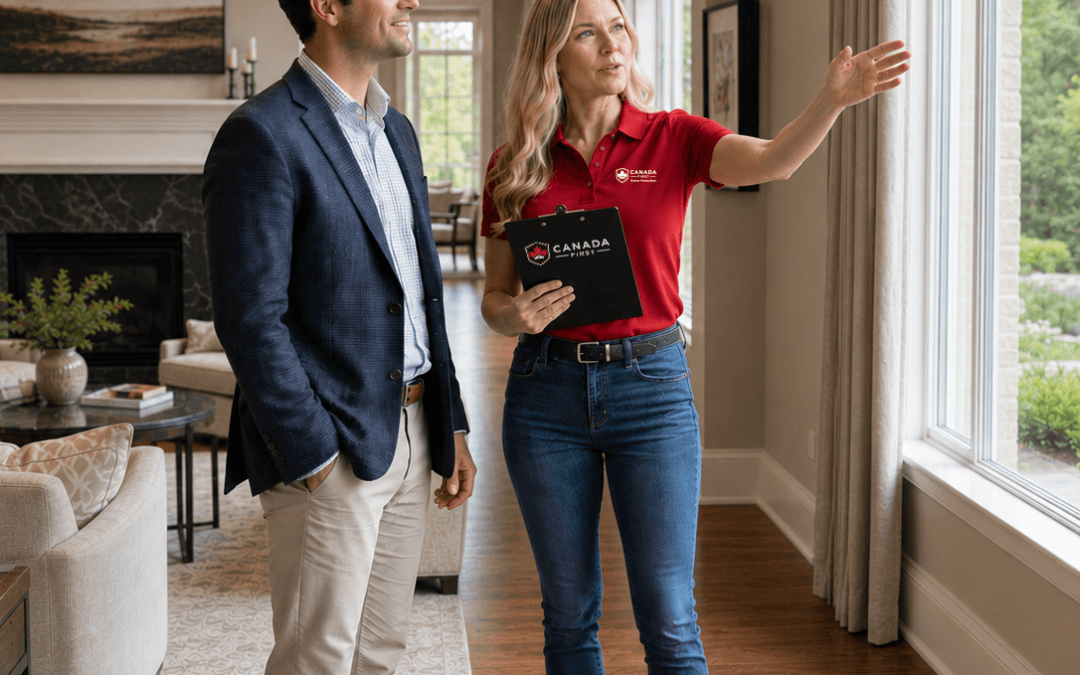
During the in-home assessment, a trained specialist reviews the property, including entry points and areas that may need stronger protection. Canada First can then explain which improvements make sense and which ones may not be necessary.
That may include door protection, window security film, high-security locks, cameras, alarms, monitoring options, FogShield, or a combination based on the home.
Find Out If FogShield Is Right for Your Home
If you are interested in security fog, you do not have to decide where it should go or how it should work with your existing security on your own.
Book a SafeHome360™ Home Defence Audit with Canada First to have your property reviewed and find out whether FogShield makes sense for your home.
If your main concern is security fog itself, contact Canada First and ask about a FogShield consultation. The team can discuss the areas you want to protect, the security measures already in place, and where fog protection may fit.
Canada First serves homeowners in Oakville, Toronto, and across the GTA.
Total home protection for Total Peace of Mind.